Flying for the first time can feel overwhelming, even before you think about the actual flight itself. Between security checks, baggage rules, departure boards, and finding your way through a busy terminal, UK airports can seem like a maze if you don’t know what to expect. Add in the pressure of arriving on time, figuring out where to go, and making sure you haven’t packed anything you shouldn’t have, and it’s easy to see why so many first-time flyers feel a knot of nerves before they’ve even left the house.
The good news is that once you understand the basic process, it becomes second nature, and most of the stress disappears. Every step, from check-in to boarding, follows a logical order designed to keep things moving smoothly for everyone. This guide walks you through everything a first-time flyer needs to know, from what to pack and how to get through security smoothly, to navigating the terminal and boarding with confidence, so you can focus on the excitement of your trip rather than the logistics of getting there.
How Early Should You Reach the Airport?
Getting your timing right is one of the most important parts of any first flight. Most UK airlines recommend arriving at least 2 hours before a short-haul departure and 3 hours before a long-haul flight. This gives you enough time to complete check-in, pass through security screening, and proceed to your gate without feeling rushed.
Traffic on routes into major airports can be unpredictable, particularly during morning peak hours. Building in an extra 30 minutes as a buffer is always worth it.
Book your transfer in advance with Swift Airport Transfer and arrive relaxed and on time. Our airport taxis in St Albans monitor your flight and plan your pickup accordingly, so you never have to guess when to leave.
Airport Boarding Check-in Steps Explained
Check-in is your first official step once inside the terminal. You will present your booking confirmation and passport at the desk, where staff will weigh your hold luggage, tag it, and issue your boarding pass. Most UK airlines open online check-in 24 to 48 hours before departure, which saves considerable time at the airport.
If you have completed online check-in and only have hand luggage, you can go straight to security. With hold luggage, you still need to visit the bag drop desk before proceeding. Always have your boarding pass saved on your phone or printed before you leave home.
Airport Security Rules in the UK You Must Know
UK airport security follows strict rules set by the Department for Transport:
- Liquids in hand luggage must be in containers of no more than 100ml each, placed inside a single clear resealable plastic bag with a maximum capacity of 1 litre.
- You may be required to take off your coat, belt, and watch before going through the scanner.
- Laptops, tablets, and mobile phones must be taken out of your bag and placed separately in the tray.
- Some airports, including Stansted and Luton, use full-body scanners that are safe and take only a few seconds.
Knowing these rules before you arrive will keep the queue moving and your stress levels low.
Essential Travel Documents for Flying
Having the right documents ready is non-negotiable. Here is a quick checklist to prepare before leaving home:
- A valid passport extending at least three months past your return date for Schengen countries, not older than 10 years on the travel day)
- Visa, ESTA, or eTA, depending on your destination country
- Boarding pass, printed or saved digitally on your phone
- Travel insurance documents and booking confirmations
- Health declarations or vaccination proof, if required by your destination
Always check the UK Government’s official foreign travel advice page for entry requirements specific to your destination, and do so at least two weeks before your trip.
How to Find Your Gate and Boarding Information?
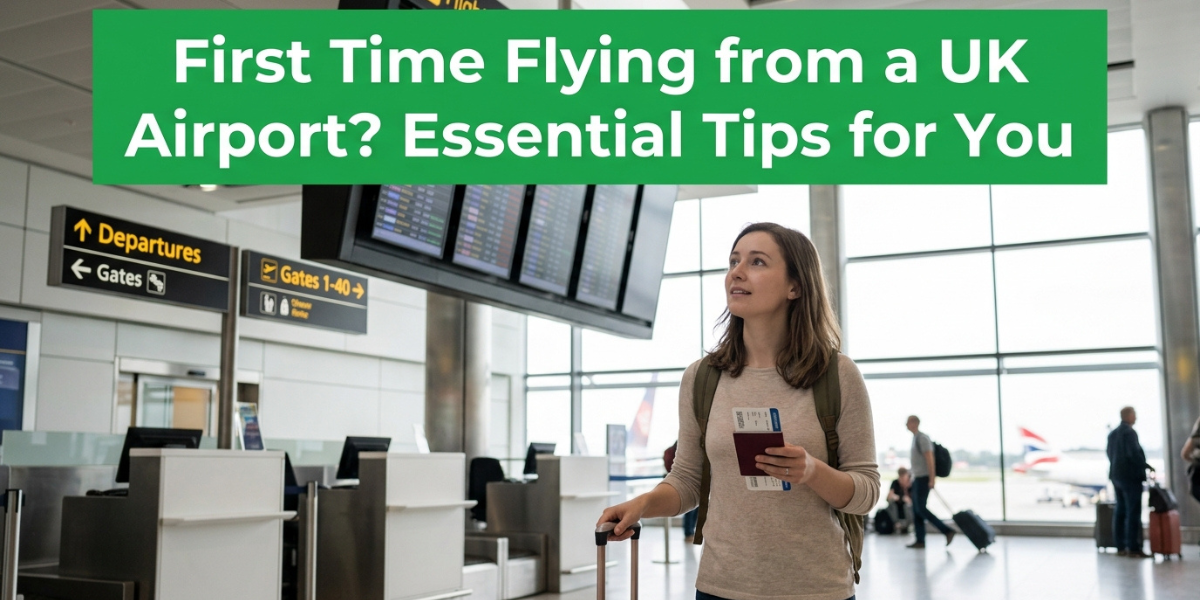
Once through security, you enter the departures lounge. Large digital screens are displayed throughout every terminal showing flight numbers, destinations, and gate information. Your gate number typically appears around 45 to 60 minutes before departure, so keep checking the screens rather than relying solely on your boarding pass.
Some gates at larger airports like Heathrow and Gatwick require a 10 to 15-minute walk, so leave yourself time to get there comfortably. When boarding opens, passengers are usually called forward by seat row. Keep your passport and boarding pass on hand for verification before stepping through.
Useful Tips for a Stress-Free First Flight
A few small habits make a big difference on travel day. Keep these in mind before you head out:
- Choose comfortable clothes and footwear that you can slip off easily at security
- Pack a reusable bottle and refill it when needed after the security checkpoint
- Download your airline’s app for live gate and flight updates on your phone
- Charge your phone fully the night before so your boarding pass is always accessible
- Keep all documents in one place, such as a travel wallet or the front pocket of your bag
- One of the biggest stresses faced by first-time flyers is getting to the airport on time. A pre-booked taxi removes that worry entirely. Swift Airport Transfer offers reliable Southend Airport taxi transfers with fixed pricing from Hertfordshire and Bedfordshire, with flight monitoring. Get in touch with us to book a ride for your next trip!
FAQs
How early should I arrive at a UK airport as a first-time flyer?
Plan to arrive at the airport at least two hours before short-haul flights and three hours before long-haul departures, plus extra travel time from areas like St Albans or Bedfordshire.
Do UK airports allow the use of digital boarding passes?
Yes, A boarding pass saved on your phone is accepted at most UK airports. Always have it charged and accessible.
What is the best way to get to the airport from Hertfordshire?
A pre-booked taxi is the most reliable option. Swift Airport Transfer covers St Albans, Hertfordshire, and Bedfordshire with fixed-price fares to all major airports.
When does my gate number appear at a UK airport?
Gate numbers usually show on departure screens around 45 to 60 minutes before your flight. Always check the screens after clearing security.
Final Thoughts
Your first flight does not have to be stressful. Once you know what to expect at each stage, the whole process becomes far more manageable than it first appears. Preparation is everything, from sorting your documents the night before to understanding exactly what happens at security and how to find your gate. The passengers who arrive calmly are almost always the ones who planned their journey carefully, right from the moment they left home.