
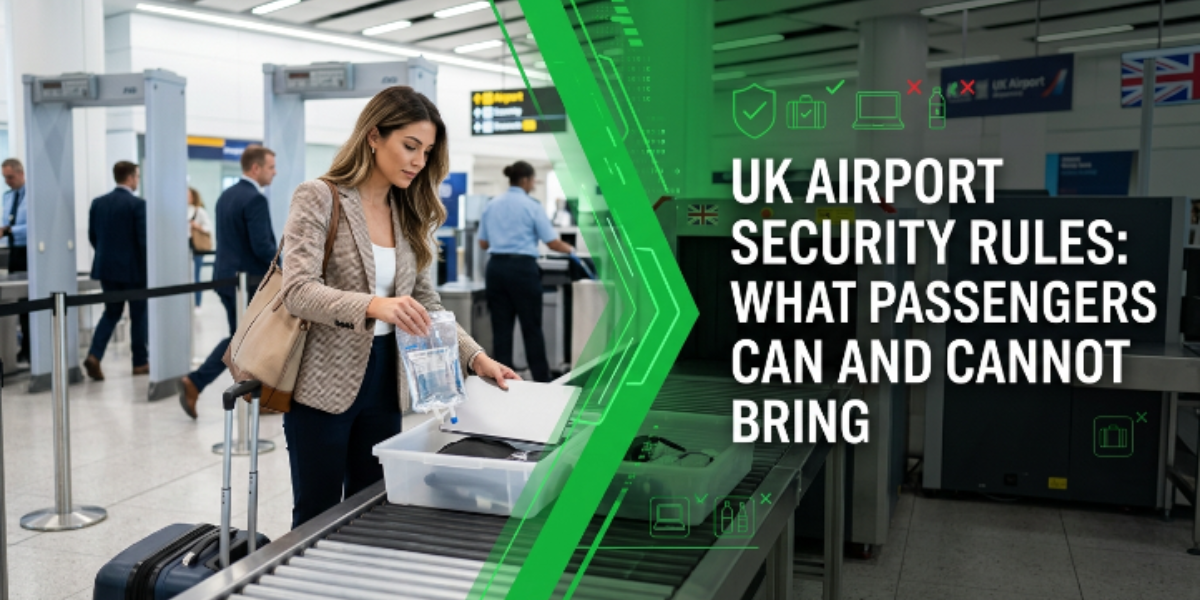
Executive Summary: UK airport security rules determine what passengers can carry through security, covering hand luggage, liquids, electronics, food, medication, prohibited items, and checked baggage restrictions. Understanding airport-specific procedures and preparing items correctly can help passengers avoid delays, confiscations, and unnecessary complications at the security checkpoint.
Heading to the airport can feel like a small adventure in itself, and the security queue is usually the first real hurdle of any trip. Knowing exactly what you can pack, what you can’t, and how the checks work makes the whole process far less stressful. If you’re flying for business or heading off on holiday, understanding what the UK airport security rules are before you leave home will save you time, hassle, and the disappointment of having a favourite item confiscated at the last minute.
This guide walks through everything passengers need to know, from hand luggage limits to liquids, banned items, and what happens once you reach the search point.
What Are the UK Airport Security Rules?
Every airport in the UK follows security standards set out by the Department for Transport and enforced locally by each airport authority. The purpose is straightforward: to keep everyone on board safe by preventing dangerous or restricted items from reaching the departure lounge or an aircraft.
Before you reach the scanners, you’ll typically be asked to:
- Depending on the airport’s screening equipment and current procedures, you may be asked to remove laptops, larger electronic devices, and other items from your hand luggage and place them in a separate tray.
- You may be asked to remove coats, belts, watches, or other items before screening. Follow the instructions given by security staff, as procedures vary by airport and screening system.
- Take out any coins, keys, or other metal objects from your pockets.
- Follow the airport’s instructions for presenting liquids and other items for screening.
- Pass through a machine that checks your body or metal objects.
Staff may also carry out random additional checks, so it helps to stay patient and cooperative throughout the process. Rules can vary slightly between airports, so it’s always worth checking the specific guidance for your departure airport in advance.
Queues can build up during busy times, so arriving prepared speeds things up. Having your boarding pass, ID, and an easy-to-open bag makes things smoother. Checks are not meant to inconvenience but to ensure safety. Understanding the rules makes the process feel routine, not an obstacle.
What Happens at the Security Screening Point?
Once you reach the checkpoint, security equipment will screen your hand luggage, and you’ll normally pass through a body scanner or metal detector. Staff monitor both processes closely and will ask you to step aside if anything needs a closer look.
If an alarm sounds or an item in your bag needs checking, you may be asked to undergo an additional pat-down search or have your belongings hand-searched. Some passengers may also be selected for additional screening at random.
Once you’re cleared, you’ll collect your belongings, get dressed if you removed a jacket or belt, and head onward to the departure lounge.
What Can You Take at Airport Security in the UK?
That’s a common question from travellers, especially those flying for the first time. The good news is that most everyday items are perfectly fine to carry through in your hand luggage.
Generally permitted items include:
- Clothing, books, and personal accessories.
- Laptops, tablets, phones, and chargers.
- Essential prescription and other medication, including larger quantities of liquid medicine where necessary.
- Baby food, milk, and sterilised water for infants travelling with you.
- Solid food items such as sandwiches or snacks.
- Umbrellas and small personal care items.
Hand Luggage Allowances Explained
Each airline sets its own hand luggage allowances for size and weight, so it’s worth checking directly with your airline rather than assuming one set of rules applies everywhere. What stays consistent across the UK, however, is the type of item that is or isn’t allowed through the checkpoint itself.
It’s also worth remembering that any additional bags, such as a small handbag or laptop case, may need to meet the same restrictions as your main piece of hand luggage, depending on your airline.
What Items Are Not Allowed at UK Airport Security?
Understanding the items not allowed at UK airport security is just as important as knowing what you can pack. Certain items are restricted because they could be used as weapons or pose a safety risk during flight.
Commonly prohibited items include:
- Knives with sharp or pointed blades, including those longer than 6cm.
- Scissors with blades longer than 6cm.
- Heavy tools and blunt instruments such as bats and clubs.
- Firearms and replica firearms.
- Explosives, fireworks and other pyrotechnics.
- Certain flammable, corrosive or toxic substances.
- Self-defence sprays such as pepper spray.
If you’re unsure whether an item is permitted, check UK Government guidance and the specific rules of your departure airport and airline before packing. An item that is prohibited in hand luggage is not necessarily permitted in the hold.
What Liquids Can You Take at Airport Security in the UK?
Liquids cause more confusion than almost any other category, so it’s worth being clear on it. Liquid rules vary between UK airports. At most airports, liquids must be in containers of no more than 100ml, although some airports now allow larger containers of up to 2 litres. Some airports also require liquids to be placed in a transparent, resealable bag, while others do not. Always check the current security guidance for your departure airport before travelling.
This includes a wide variety of daily products, including:
- Toiletries such as shampoo, shower gel, and toothpaste.
- Cosmetics and skincare items.
- Contact lens solution.
- Drinks, soups, and other non-solid food items.
Exceptions are sometimes made for baby milk, prescription medicines, and special dietary requirements, though these items may be subject to additional screening. Anything exceeding the permitted container size will generally need to go into hold luggage unless an applicable exemption applies.
| Item Category | Hand Luggage | Hold Luggage |
| Liquids above the airport’s permitted security limit | Usually not allowed through security | Often allowed, depending on the substance |
| Sharp objects | Restricted | Some may be allowed, subject to airline rules |
| Laptops and electronics | Generally allowed | Generally allowed |
| Essential medication | Allowed, including certain larger liquid quantities | Generally allowed |
| Flammable or dangerous substances | Generally prohibited | Many are also prohibited |
Before you even get to the terminal, sorting your route to the airport is one less thing to think about on travel day. If you need reliable cabs in London City Airport, Swift Airport Transfer offers dependable, pre-booked journeys so you can focus on getting through security calmly rather than worrying about how you’ll get there.
Understanding the UK Airport Baggage Security Rules
Alongside the rules for what you carry through the checkpoint, separate rules cover hold luggage. While the restrictions are generally more relaxed for checked bags, certain items remain banned regardless of where they’re packed, including firearms without proper authorisation, explosive materials, and highly flammable substances.
While some items restricted in hand luggage may be permitted in checked baggage, dangerous goods such as explosives, certain chemicals, firearms without the required authorisation, and self-defence sprays may remain prohibited. Airline rules can also impose additional restrictions, so check both the UK Government guidance and your airline’s baggage rules before packing anything unusual.
Tips for a Smoother Security Experience
A little preparation goes a long way. Consider the following before you travel:
- Pack liquids and electronics somewhere easily accessible.
- Keep medication in its original packaging with a prescription if required.
- Avoid packing valuables or essential documents in hold luggage.
- Check your specific airline’s guidance alongside general airport rules.
- Wear slip-on shoes where possible to speed up the screening process.
- Consolidate liquids into the fewest containers you reasonably need.
Final Thoughts
Airport security doesn’t need to be a source of stress once you know what to expect. By understanding what you can pack, what’s restricted, and how liquids and baggage rules apply, you can move through the checkpoint with confidence rather than uncertainty. A little planning before you leave home makes a genuine difference to how smoothly your journey begins.
And speaking of smooth journeys, if you’re looking for a dependable airport taxi in St. Albans, Swift Airport Transfer can take you to the terminal, leaving you free to focus on getting through security and off on your travels without a hitch!
FAQs
Yes, solid food such as sandwiches, snacks, and packed lunches is generally allowed through security in hand luggage. Liquid or semi-liquid foods, like soups or sauces, are treated as liquids and must fit within the standard container and bag limits.
Essential medication is allowed through airport security, including liquid medication that may exceed standard liquid limits when necessary. If liquid medication is in a container larger than 100ml, you may need proof that it has been prescribed to you, such as a prescription or doctor’s letter. Security staff may also need to screen the medication separately.
Yes, laptops, tablets, phones and chargers are generally permitted in hand luggage. Depending on the airport’s screening equipment and procedures, you may be asked to remove larger electronic devices from your bag for separate screening.
Baby food, milk, and sterilised water are allowed in reasonable quantities for the journey, even above standard liquid limits, though they may be subject to additional screening or testing at the checkpoint.
Passengers are typically asked to remove laptops and large electronics, jackets and bulky outerwear, belts, and anything metal from their pockets, and to present liquids separately before walking through the scanner.